Pages

Thursday, October 4, 2012

New York!

The focus of this trip was illuminated manuscripts.  I went to Crossing Borders: Manuscripts from the Bodleian Libraries at the Jewish Museum.  Then I spent a couple of hours at the Met.  It was an awesome day...

Crossing Borders at the Jewish Museum

There were many cross-cultural connections made among the manuscripts displayed-- Hebrew, Latin, Arabic etc.-- that were enlightening.  Christian writers were strongly influenced by Rashi, an 11th century Rabbi, and the styles of Hebrew scripts were influenced by the language of the place where they were written. 

Some highlights for me were handwritten manuscripts by Maimonides, illustrations/diagrams by Rashi, diagrams and maps incorporated into manuscripts, handwritten notes, micrography, and the scale of some of the manuscripts-- quite small, delicate, and intimate.  It made me reconsider the way I use scale.

I took LOTS of pictures, but the Jewish Museum has such a wonderful website for the exhibit (including reproductions of full manuscripts).  Here is the link:

Metropolitan Museum of Art

I saw Paintings on Parchment: Italian Renaissance Illuminations from the Robert Lehman Collections
The Galleries for the Art of the Arab Lands, Turkey, Iran, Central Asia:  There were exquisite manuscripts throughout (including a few in Hebrew), with beautiful designs, colors etc.
I also saw Japanese, Chinese, and Egyptian manuscripts and scrolls.  

I noticed many similarities in manuscripts across cultures-- mainly in materials (the inks and gold leaf), but also in design and composition.  It seemed to me that the connections were stronger in manuscripts than in other art forms.  

Here are a few of the many photos I took (I apologize that I do not have accurate descriptions of all the works-- the photographs of the plates are not all readable):
Shiraz, Iran, 15th Century


Sakai Hoitsu, ca. 1820 (left), and Suzuki Kitsu, mid 19th century

Poetry Screen (Waka Byobu): Six Poems by Women Poets
Konoe Nobutada  (Japanese, 1565–1614)
Scene from The Ise Stories: “Mount Utsu” (Utsu no yama)
Tawaraya Sôtatsu  (Japanese, died ca. 1640)


Xi Hu, Hangzhou, Zhejiang, ChinaLois Conner  (American, born New York City, 1951), Lois Connor, 1998 

Monday, September 24, 2012

Drawings, Composition

The exposures weren't great, but I think these are all worth another shot...


Starting to think about the composition for the Esther Scroll:


Inspired by this Iraqi megillah (Braginsky collection):

Playing with patterns:


Inspired by:

An old tree drawing:


Leonardo's water studies:


Experimenting With UV Light

I used two 48" white Black Lights (BL) by GE in a double-light/under-mount utility fixture.

1) First we (Tom the wood-shop monitor and I) tested the light with a photography light meter.  The light consistently covered an area of 12"x36", which made me rethink my original design (more on that later).
2) When I got home I tested the light again with treated papers underneath. I put a negative in the center to test exposure:
3) The results-- notice the lighter edges:
4) Checking value with another cyanotype:


Thursday, September 20, 2012

More Illuminations

Blue, black, and purple backgrounds:

I am researching these because of the dark blue nature of cyanotypes.

Schocken Bible:
Frankfurt Mishne Torah:
The Black Hours:
The Morgon Library Online has the full manuscript 

Vienna Genesis:

Charles V Vaudetar Bible:
The Blue Qu'ran:
It is beautiful...

A scientific codex:

To inspire my work on the aloe plant...
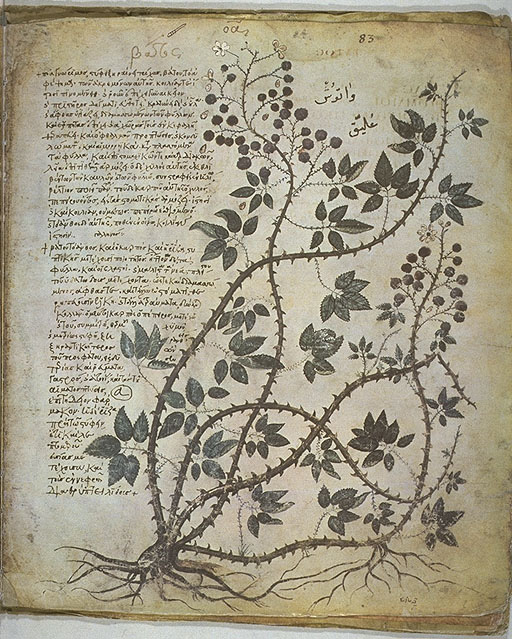
The Vienna Dioskurides

Persian Illuminations:


A contemporary Esther Scroll by Avner Moriah:


And of course, the Bayeux Tapestry:

At 70 m long (approx. 200 ft), with incredibly detailed animated illustrations-- it is a must-see if you are ever in the Normandy region of France.


Persian Jewish Manuscripts

Looking for inspiration...

The story in the Book of Esther took place in ancient Persia-- hence my interest in Persian manuscripts.


At Yale!  I sent a request to view in person.  I hope it works out:


Written in Judeo-Persian (the "Jewish" version of Farsi):


The Bouton Haggadah done in a Persian style.  From the Braginsky collection:


Sunday, September 16, 2012

The Results

For the original photoshopped images, see previous post.

Experimenting with contrast:

Still needs tweaking.  If the middle strip had more whites, it would be close to prefect...


Playing with layering, inversions, and text:


Filters:

some were too light!

Cyanotypes from older cyanotypes:

eh...

More play:


Converting drawings:

yes!  Will try some more.


Thursday, September 13, 2012

Making the Negatives: Photoshop

The basic process is simple:
1. Import digital image into Photoshop.
2. "Desaturate"
3. Adjust using "exposure" or "levels."
4. "Invert"
5. Print onto transparency--I have used Inkpress and Pictorico with good results.  Use an inkjet printer.

Of course nothing about this process is simple.  Different levels of contrast will give different results.  I spent quite a bit of time researching "the perfect negative," but then decided to just play around in Photoshop.  After all, I am not trying to make the perfect photo...  Below are the Photoshop results; tomorrow the magic happens with the actual cyanotype printing.

Experimenting with contrast:

Layering, inversions:


Filters:


Making  negatives out of old cyanotypes:


Playing with previous compositions:


Converting Drawings:


I also played with distortions, but don't want to post without permission from the distorted people (or their parents)...